
History of Saska Kępa
- Robert Bongart

- 26 wrz 2025
- 2 minut(y) czytania
Early History
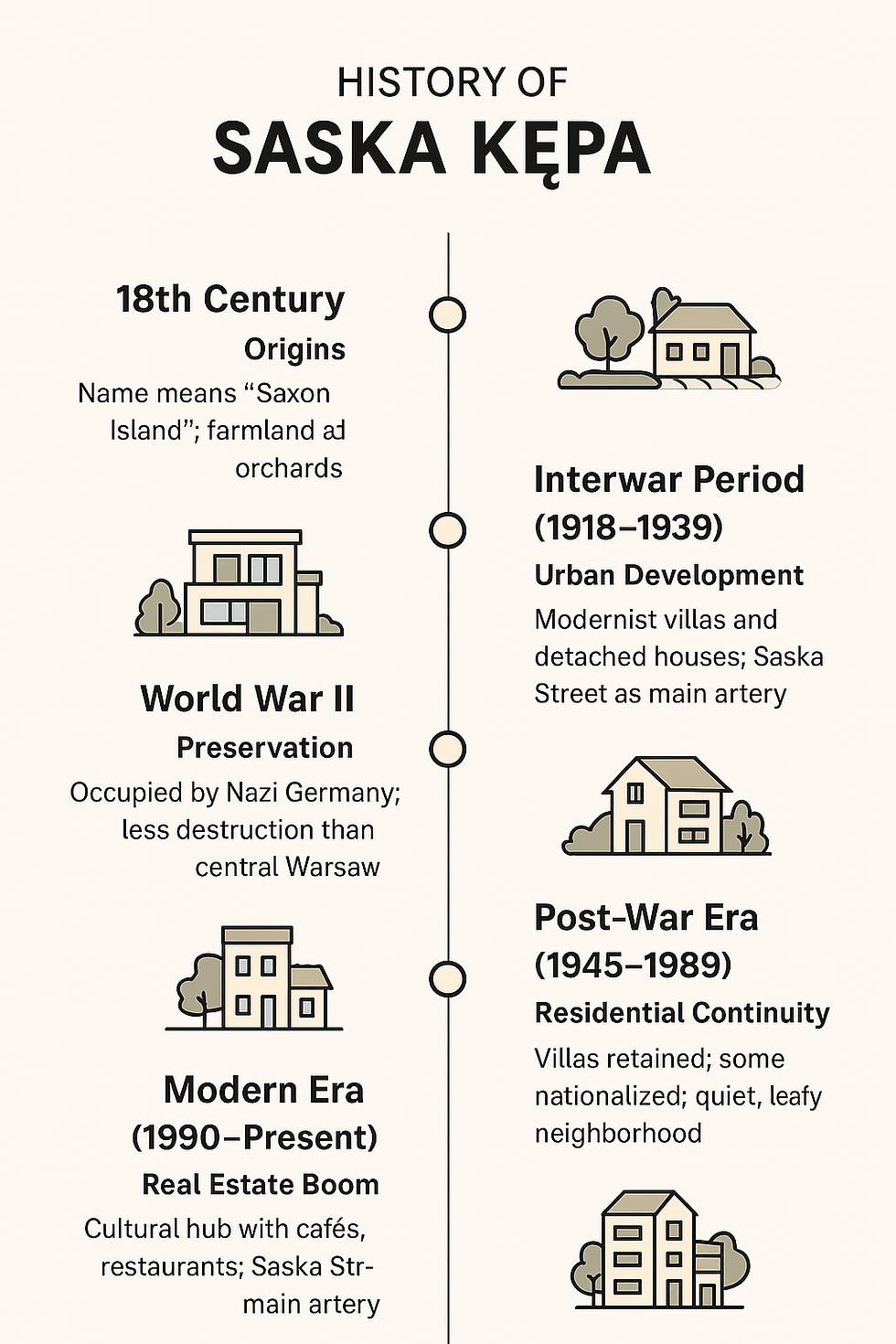
Origins: The name “Saska Kępa” means “Saxon Island,” reflecting its location on the east bank of the Vistula River and its connection to the Saxon royal troops who camped there in the 18th century.
18th–19th Century: Predominantly farmland and orchards, with some villas for wealthy Warsaw residents. Its position near the Vistula kept it relatively isolated from central Warsaw.
Interwar Period (1918–1939)
Urban Development: After Poland regained independence in 1918, Saska Kępa was transformed into a residential neighborhood with modernist villas and detached houses, often surrounded by gardens.
Saska Street: Developed as one of the main arteries of the neighborhood, connecting residents to central Warsaw. It quickly became a hub for daily life, with schools, shops, and small businesses. Many villas along Saska Street were built in functionalist and modernist styles, many of which survive today.
Cultural Hub: Intellectuals, artists, and diplomats moved into the area. Embassies and consulates were established, giving Saska Kępa a cosmopolitan reputation.
Architecture: The neighborhood’s interwar buildings remain a highlight, reflecting Warsaw’s functionalist and modernist trends.
World War II
Occupation: The area was occupied by Nazi Germany but suffered less destruction than central Warsaw, preserving much of its interwar architecture.
Resistance Activity: Residents contributed to the resistance, though Saska Kępa was not a major battleground.
Post-War Era (1945–1989)
Residential Continuity: Villas remained, though some were nationalized or converted for communal use under the communist government.
Cultural Significance: Continued to be home to artists, intellectuals, and Warsaw’s cultural elite.
Infrastructure: Streets like Saska Street were paved, and public transport improved, while the neighborhood maintained its quiet, leafy character.
Modern Era (1990–Present)
Real Estate Boom: Following the fall of communism, Saska Kępa became highly desirable due to its architecture, location, and charm. Real estate prices rose steadily.
Cultural Life: Cultural events, galleries, and restaurants flourish, particularly along ulica Francuska and Saska Street, which remain central to neighborhood life.
Saska Street Today: Still a key artery, blending residential charm with boutiques, cafés, and convenient access to green areas along the Vistula. It continues to preserve its interwar architecture while supporting modern urban life.
Conservation Efforts: Many villas and buildings are heritage-protected, ensuring the neighborhood retains its historic character.
Why Saska Kępa Is Special
Architectural Heritage: Preserved interwar villas and functionalist buildings, especially along Saska Street.
Cultural Hub: Historically home to intellectuals, artists, and diplomats.
Community Feel: Quiet, green, and centrally located—like a small village in the city.
Accessibility: Excellent access to Warsaw’s center and the Vistula boulevards.
Modern Amenities: Cafés, restaurants, and boutique shops blend seamlessly with historic architecture.


Komentarze